
The drop in temperatures during late autumn and winter brings crisp air, cozy nights, and for millions of Continuous Positive Airway Pressure (CPAP) users, a unique set of therapy challenges. When your bedroom temperature drops, the delicate balance between pressurized air and comfortable breathing is easily disrupted.
Cold air holds significantly less water vapor than warm air. When your CPAP machine pulls cold, dry room air into its system and forces it through your nasal passages all night, your respiratory system takes the brunt of the impact. The result? Persistent nasal dryness, burning sensations, morning sore throats, heavy congestion, and in severe cases, nasal bleeding or swelling.
Understanding how your CPAP heated humidifier operates during colder months—and how to manage the dreaded phenomenon known as “rainout”—is essential for maintaining uninterrupted, comfortable sleep apnea therapy year-round.
Why Winter Air Wreaks Havoc on CPAP Therapy
Your upper airway naturally acts as a built-in humidifier, heating and moisturizing the air you breathe before it reaches your lungs. However, CPAP therapy introduces a continuous, high-volume flow of air. In cold weather, this constant airflow quickly strips your nasal mucosa of natural moisture.
To protect itself from dry air, your body responds by swelling the blood vessels in your nasal passages and producing excess mucus. This creates a frustrating paradox: despite receiving clear airflow from your machine, you wake up completely stuffed up. Many patients, unable to breathe through their nose, resort to mouth breathing during sleep. This rapidly leads to severe dry mouth, throat irritation, and significant leaks if you wear a nasal or pillow mask, ultimately reducing the effectiveness of your therapy.
This is where a heated humidifier becomes indispensable. By passing the pressurized air over a warm water chamber, the system infuses moisture into the airflow, preventing tissue inflammation and keeping your airways clear.
The Cold Room Dilemma: Understanding “Rainout”
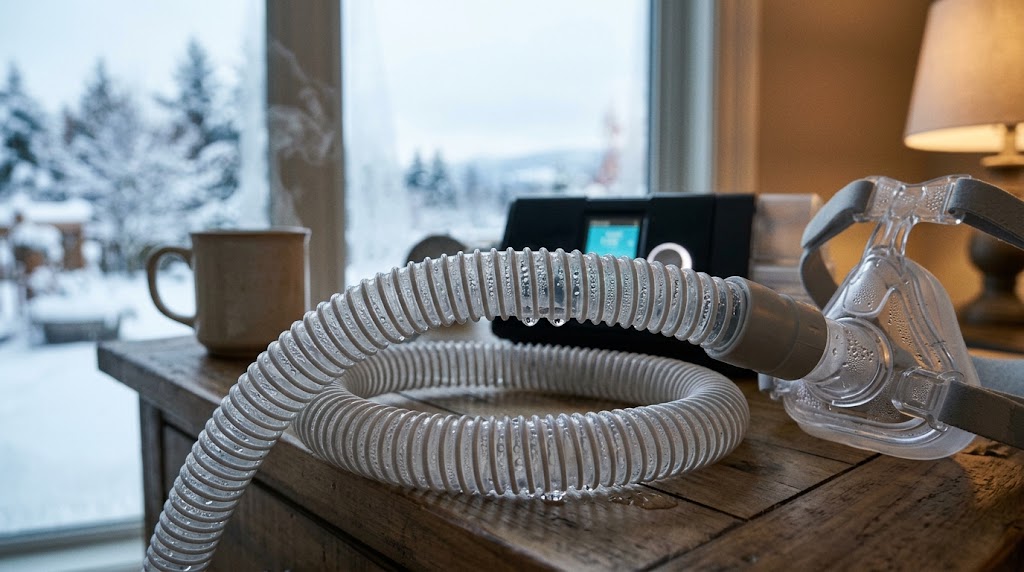
While turning up your humidifier in winter seems like the obvious solution, it often triggers a major side effect: CPAP rainout.
Rainout occurs when the warm, moisture-rich air leaving your CPAP water chamber travels through a tube exposed to the cold ambient air of your bedroom. As the air inside the tube cools, it loses its ability to hold water vapor. The vapor condenses back into liquid water droplets along the inside walls of the hose.
Within a few hours, these droplets accumulate and cause several uncomfortable issues:
- Gurgling Noises: Water collecting in the tubing creates loud popping or gurgling sounds as air pushes past it, waking both you and your bed partner.
- Water Splattering: The airflow eventually pushes the condensed water up into your mask, splashing cold water directly onto your face or nose during deep sleep.
- Pressure Fluctuations: Pooled water inside the hose can restrict airflow, leading to incorrect pressure delivery or machine error readings.
Solutions for Optimal Comfort in Colder Environments
Managing heated humidification in a cold room doesn’t mean you have to sleep in an uncomfortably warm bedroom. You can optimize your setup using several targeted adjustments:
1. Upgrade to Heated Tubing
Heated CPAP tubing is the most effective defense against winter rainout. These specialized hoses contain fine copper heating wires built into the tubing wall. By keeping the internal temperature of the hose consistently warm from the machine all the way to your mask, the air cannot cool down, eliminating condensation entirely while delivering optimal humidity levels.
2. Fine-Tune Your Humidifier Settings
If you use standard, unheated tubing and experience rainout, try lowering your humidifier’s heat setting by one or two levels. While this slightly reduces moisture output, it prevents excess vapor from condensing inside the tube. If your machine features an “Auto” humidity control mode, enable it—modern machines monitor room temperature and adjust output dynamically to prevent condensation.
3. Insulate Your Tubing
If you don’t have a heated hose, insulating your existing tube helps maintain internal air temperature. Fleece tubing wraps or cloth hose covers shield the air inside from the chilly bedroom environment. Alternatively, running the hose under your bed covers utilizes your own body heat to keep the tubing warm.
4. Position Your Machine Below Bed Level
Place your CPAP unit on a shelf or stand lower than the height of your mattress. Gravity will encourage any small amount of moisture that forms inside the tube to drain back down into the humidifier chamber rather than flowing upward into your mask.
Winter Maintenance and Hygiene
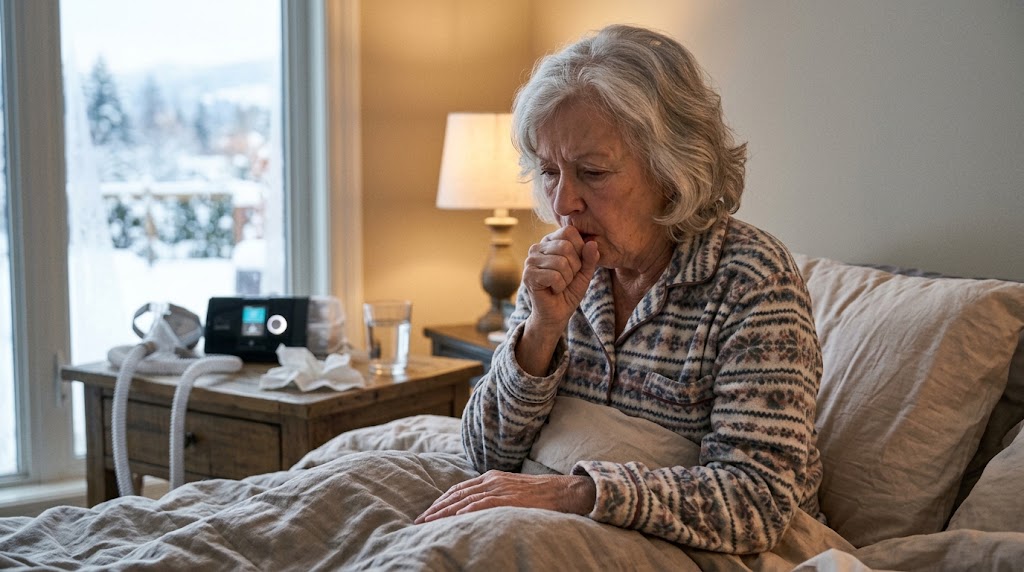
Cold weather is also prime time for seasonal viruses, flu, and bacterial infections. Maintaining strict hygiene with your CPAP humidification system is vital during winter months:
- Use Distilled Water Only: Never fill your chamber with tap water. Tap water minerals create scale buildup, harbor bacteria, and degrade your heating plate over time.
- Empty Daily: Empty remaining water every morning, allow the chamber to air dry, and refill with fresh distilled water each night before bed.
- Increase Cleaning Frequency: Disinfect your water chamber, mask cushion, and tubing weekly using mild soap and warm water to prevent mold and bacterial growth, which thrive in moist environments.
For more information on using your CPAP machine properly, check out our other articles at Sleeprestfully.com!