Maintaining a majestic beard or a well-groomed goatee is a point of pride, but it introduces a frustrating roadblock when you are diagnosed with obstructive sleep apnea (OSA).
The underlying physics of standard continuous positive airway pressure (CPAP) therapy rely on a pressurized, airtight seal. For decades, CPAP masks were engineered with the assumption that they would seal against smooth, bare skin. When you introduce coarse facial hair into the equation, standard silicone cushions struggle to establish a tight seal.
This leads to the dreaded CPAP mask leak—high-velocity air escaping through the gaps in your beard, causing loud whistling noises, dry eyes, and compromised therapy performance. Worse yet, many bearded patients try to compensate by overtightening their headgear, resulting in painful facial sores, broken hair follicles, and tension headaches.
The good news? The CPAP industry has evolved rapidly. Modern mask engineering now accounts for diverse facial structures and grooming styles. This comprehensive guide reviews the top-performing CPAP masks for beards and facial hair, helping you protect your therapeutic compliance without sacrificing your style.
The Science of the “Silicon-on-Hair” Leak
To understand why certain masks fail, it helps to look at how traditional mask seals work. Standard CPAP masks utilize a dual-wall silicone cushion. When pressurized air enters the mask, it inflates the thin outer wall, pushing it gently against your skin to form a seal.
However, hair is structurally rigid and textured. When silicone rests on a beard, mustache, or stubble, the individual hair strands act as tiny, microscopic tunnels. Pressurized air easily flows through these gaps.
To overcome this, we have to look to masks that do one of three things:
- Bypass the beard entirely by seating the seal inside or directly under the nose.
- Utilize adaptive seal materials (like memory foam) that can contour around coarse hair fibers.
- Use ultra-thin, draped silicone that conforms dynamically to irregular surfaces.
Category 1: Nasal Pillow Masks (The Gold Standard for Beards)
If you are a nose-breather, nasal pillow masks are the absolute best choice for facial hair. Because these masks bypass the face entirely and seal directly inside the base of the nostrils, your beard length could be two feet long and it wouldn’t impact your therapy.
1. ResMed AirFit P10
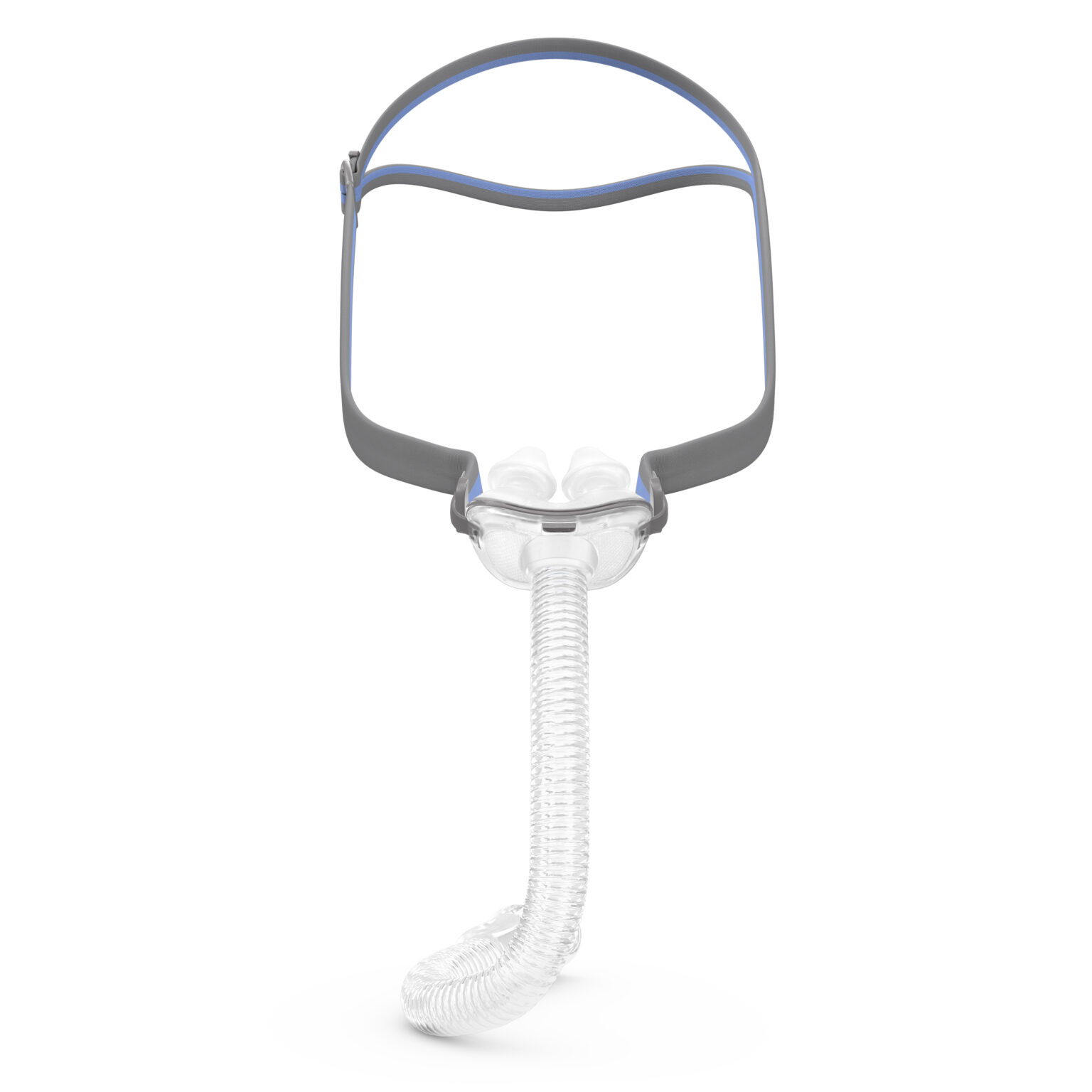
- The Design: A featherlight, minimalist mask with a simple split-strap elastic headgear.
- Why it works for beards: The dual-wall nasal pillows insert gently into the nostrils. Since the mask frame does not make contact with your cheeks, jawline, upper lip, or chin, there is zero risk of facial hair causing a leak.
- Best for: Active sleepers and those who prefer a weightless feel.
2. ResMed AirFit P30i
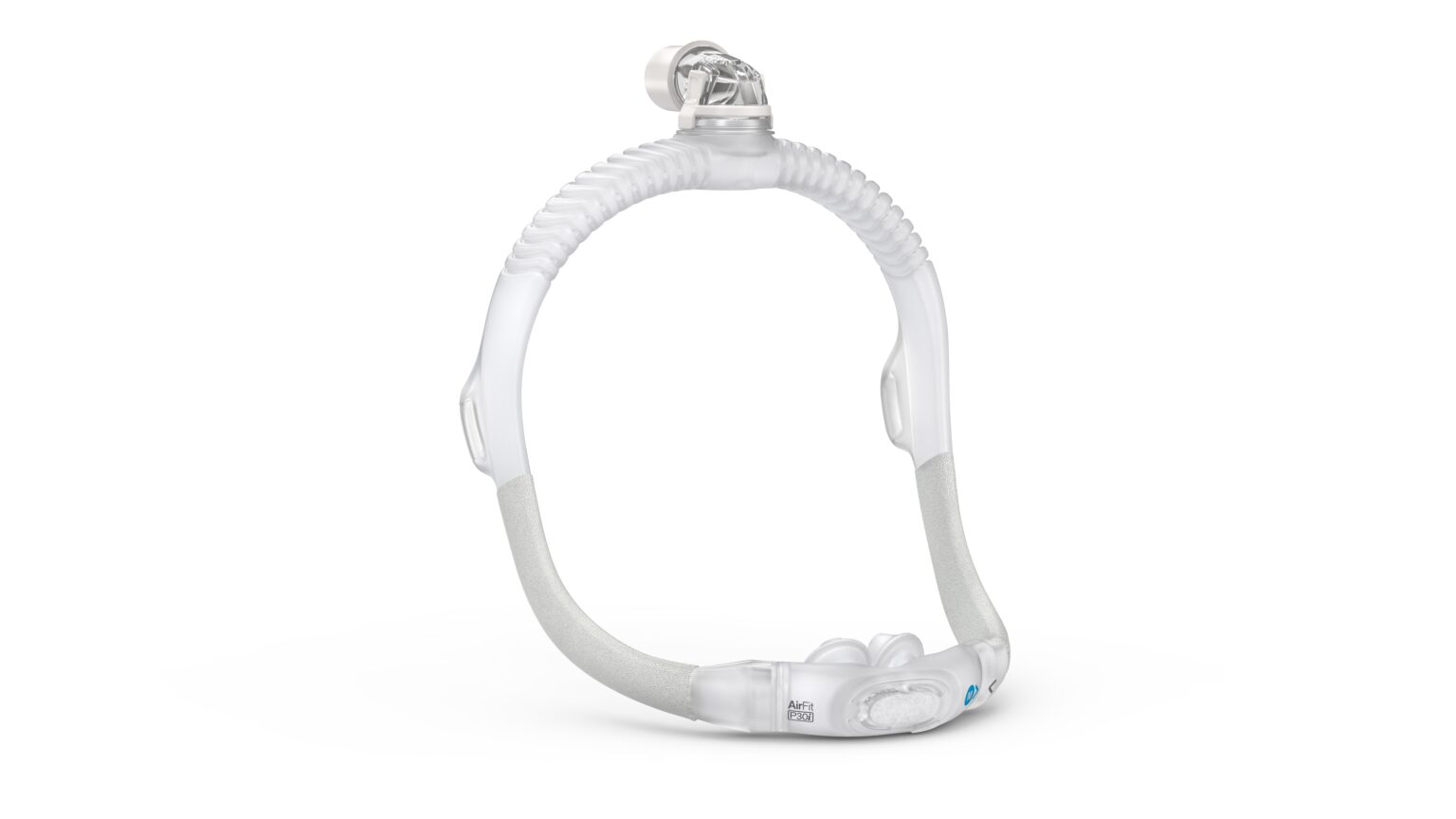
- The Design: A nasal pillow system featuring a top-of-the-head hose connection.
- Why it works for beards: Like the P10, it seals inside the nostrils. However, the top-of-the-head connection routes the CPAP hose completely away from your face. This prevents the hose from dragging across your beard or mustaches as you toss and turn, eliminating hair-tugging.
- Best for: Active side-sleepers who move frequently during the night.
Category 2: Minimal-Contact Nasal Cradle Masks
If you dislike the feeling of inserts inside your nostrils but still want to bypass a full beard, nasal cradle masks are the perfect middle ground. These rest gently under the base of your nose, sealing around the outside of your nostrils.
1. Philips Respironics DreamWear Nasal
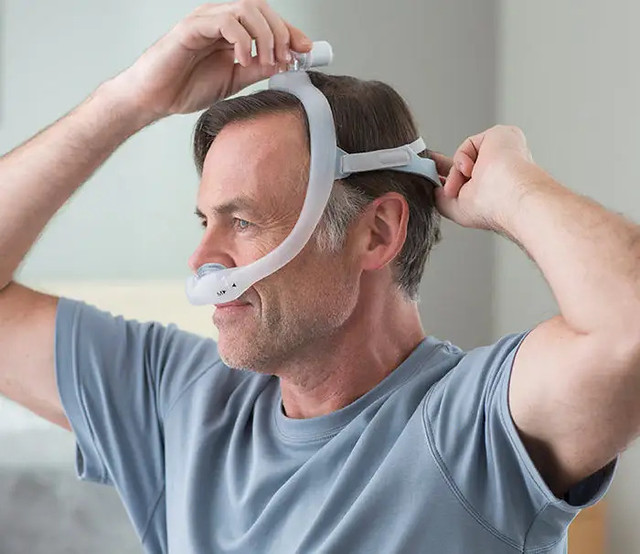
- The Design: A modular frame where the pressurized air flows through a hollow silicone frame directly to a cradle cushion under your nose.
- Why it works for beards: It makes contact only under the nasal septum and along the top of the cheekbones. It completely avoids the chin and jawline where the thickest part of a beard grows.
- Best for: Sleepers who want an open field of vision to read or watch TV in bed.
2. ResMed AirFit N30
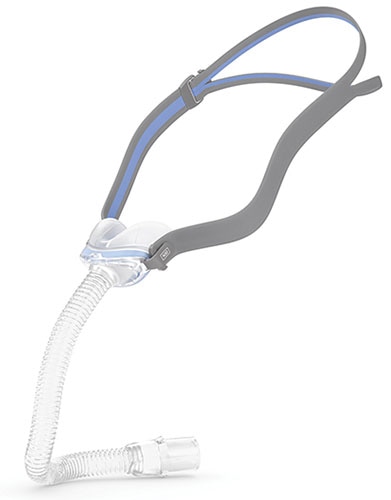
- The Design: An ultra-compact under-the-nose nasal cradle mask with a highly elastic slip-on headgear.
- Why it works for beards: The narrow, low-contact cushion sits snugly under the nose without placing pressure on the upper lip or mustache area. It offers excellent stability for side sleepers.
- Best for: Those who want a quick-fit mask that requires virtually zero adjustment.
Category 3: Full-Face Masks (For Mouth Breathers with Beards)
If you breathe through your mouth or suffer from chronic winter nasal congestion, nasal masks are not an option. You require a full-face mask. Fortunately, advanced material engineering has made full-face therapy viable for beards.
1. ResMed AirTouch F20 (The Memory Foam Champion)
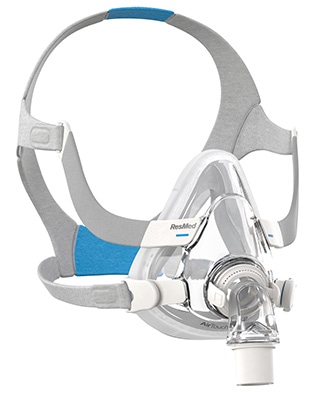
- The Design: A premium full-face mask featuring ResMed’s proprietary UltraSoft™ memory foam cushion.
- Why it works for beards: This is arguably the most famous beard-friendly full-face mask on the market. While silicone sits rigidly on top of hair, the malleable memory foam behaves like a sponge—it actively conforms around the individual strands of your beard, compressing to create a reliable seal without requiring you to crank down the headgear straps.
- Best for: Thick, coarse, full beards where silicone seals consistently fail.
2. ResMed AirFit F40
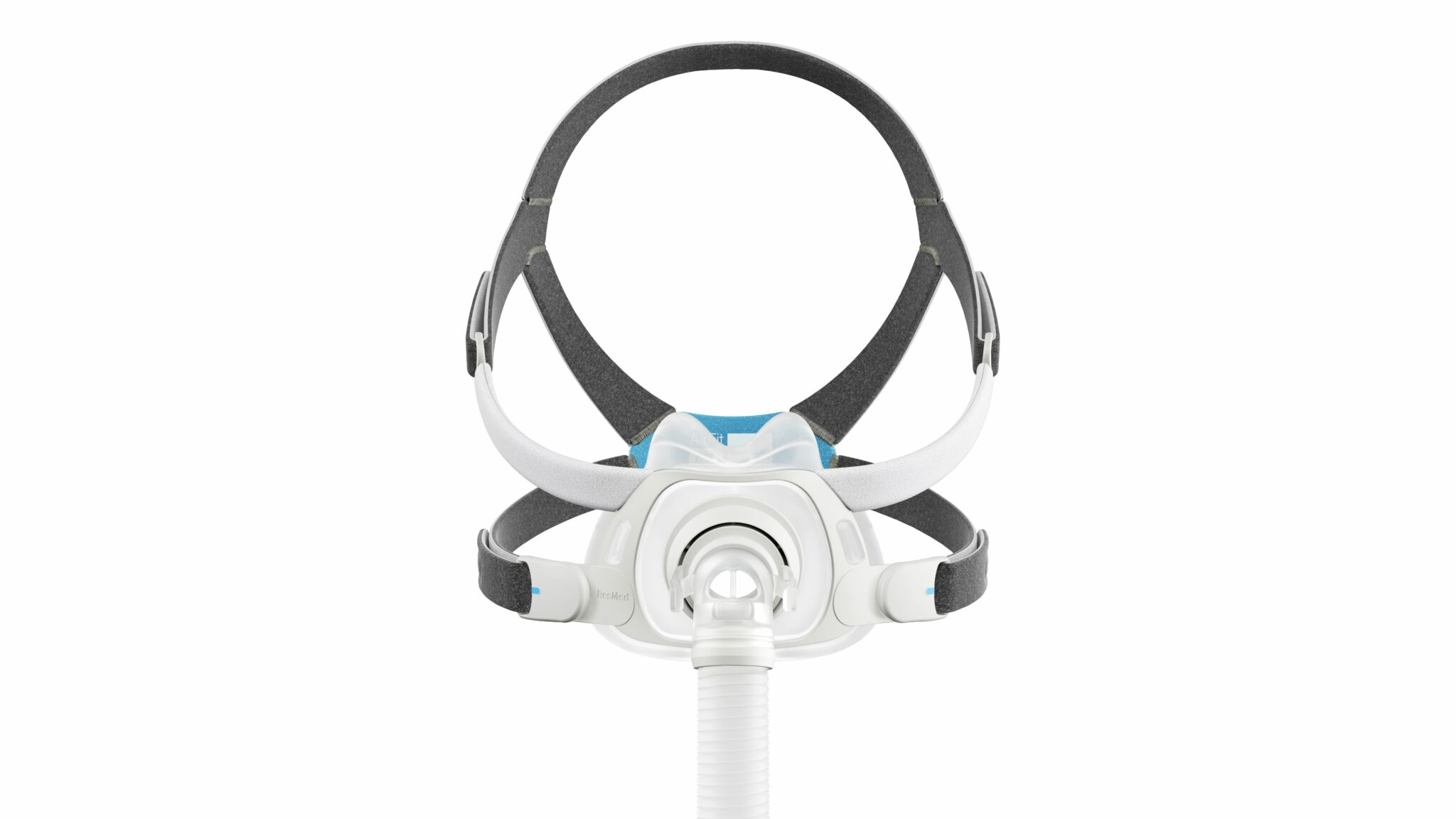
- The Design: A ultra-thin, low-profile full-face mask utilizing AdaptiSeal™ technology.
- Why it works for beards: The silicone used in the F40 cushion is up to 50% thinner than traditional models. This allows the soft material to gently “drape” and mold over goatees, short beards, and stubble. Because it sits under the nose rather than resting on the bridge of the nose, it has a tiny footprint.
- Best for: Men with trimmed beards, goatees, or heavy stubble who prefer the hygiene of easy-to-clean silicone over memory foam.
3. Fisher & Paykel Evora Full Face
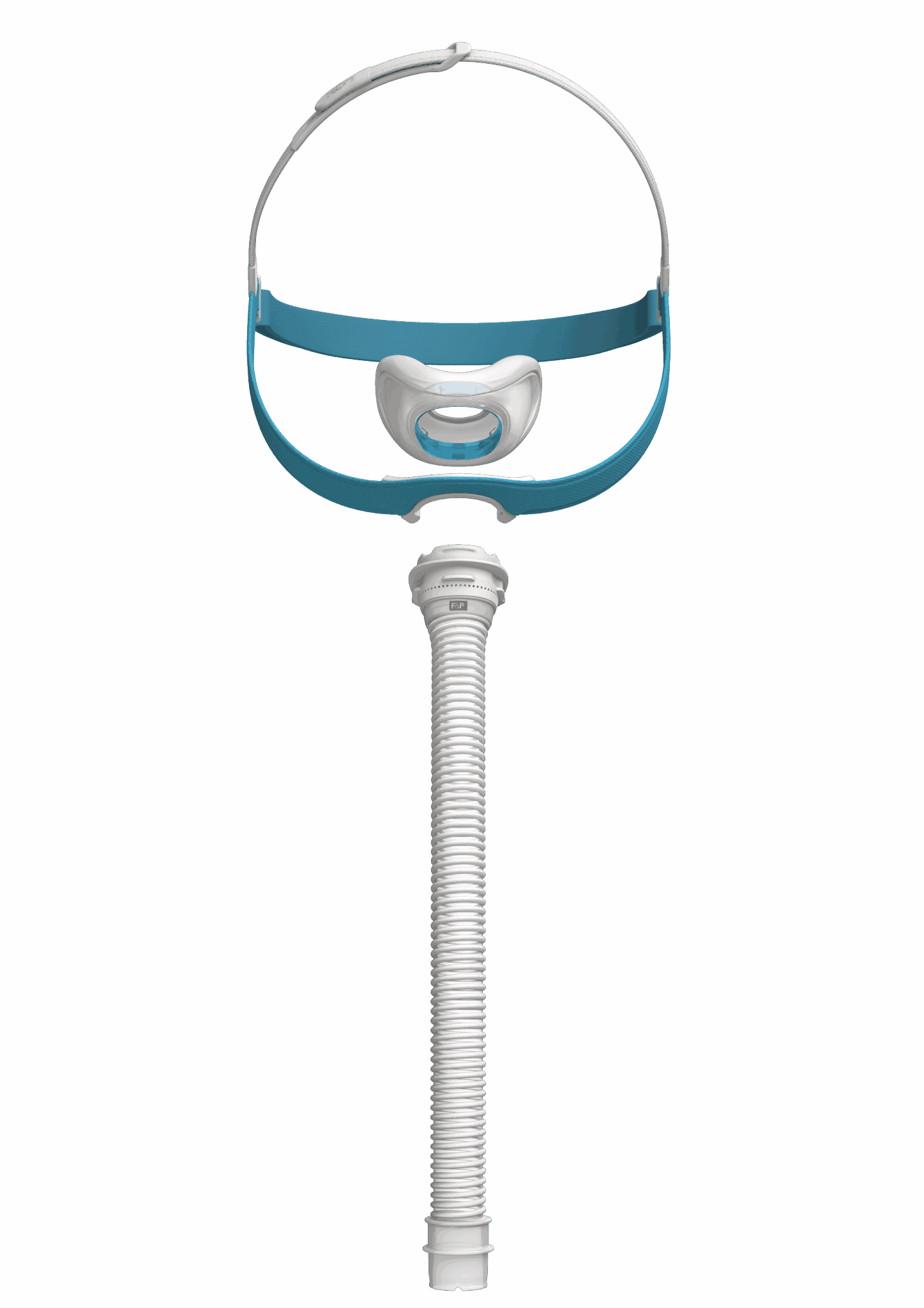
- The Design: A compact full-face mask with a floating under-the-nose seal and a structured, easy-fit headgear.
- Why it works for beards: The Evora Full uses a unique dynamic seal that stays in place even when you shift sleeping positions. The cushion wraps under the nose and sweeps down over the mouth, keeping contact light and forgiving along the chin line.
- Safety Note: Unlike the AirFit F40, the Evora Full uses a magnet-free “key-clip” headgear system, making it 100% safe for individuals with pacemakers or other medical implants.
- Best for: Active mouth-breathing sleepers with medical implants.
Beard-Friendly CPAP Mask Comparison Matrix
The table below breaks down how each top-tier mask performs when paired with different facial hair styles.
| Mask Model | Mask Type | Best Beard Match | Seal Material | Key Advantage |
|---|---|---|---|---|
| ResMed AirFit P10 | Nasal Pillow | Full/Long Beards | Silicone Cushions | 100% leak-proof across the beard line |
| ResMed AirFit P30i | Nasal Pillow | Full Beards & Mustaches | Silicone Cushions | Top-of-head connection prevents hair-tugging |
| DreamWear Nasal | Nasal Cradle | Short Beards & Goatees | Silicone Frame | Minimal facial contact, open view |
| AirTouch F20 | Full-Face | Thick/Coarse Beards | Ultra Soft Memory Foam | Compresses around hair for an airtight seal |
| AirFit F40 | Full-Face | Short Beards & Stubble | Thin AdaptiSeal Silicone | Lightweight, low-profile, easy to wash |
| F&P Evora Full | Full-Face | Goatees & Trimmed Beards | Dynamic Silicone Seal | 100% magnet-free design for pacemaker safety |
Pro-Tips for Optimizing Your CPAP Seal with a Beard
Selecting the right mask is only half the battle. Implement these bedroom grooming hacks to guarantee a perfect seal night after night:
1. Apply a Beard Balm or Oil Before Bed
Dry, wiry beard hair is highly stubborn and stands on end, making it easier for air to leak through the gaps. Applying a small drop of natural beard oil or a moisturizing balm right before putting your mask on softens the hair follicles. Soft hair bends easily under the weight of the mask cushion, yielding a far superior airtight seal.
2. Keep Your “Seal Zone” Slightly Trimmed
If you have a full face mask, you don’t have to shave your beard off. However, using a beard trimmer to clean up the upper cheekbones and the small divot directly under your lower lip (the “seal zone”) can make a massive difference. Thinning out the density in these strategic contact zones gives the silicone a much better chance of holding pressure.
3. Consider a CPAP Chinstrap
If you choose a highly effective nasal pillow mask but keep waking up with dry mouth due to mouth breathing, do not immediately give up and switch to a bulky full-face mask. Instead, pair your nasal pillow mask with a CPAP Chinstrap. The chinstrap slips over your headgear and keeps your jaw gently closed, training you to breathe nasal-only while letting your beard flow completely free.
Protect Your Beard, Perfect Your Sleep!
There is absolutely no reason to choose between having a healthy respiratory system and keeping your facial hair.
If you primarily breathe through your nose, go straight for the ResMed AirFit P10 or P30i—they are virtually immune to beard-induced leaks. If you are a mouth-breather and need a full-face setup, invest in the ResMed AirTouch F20. The memory foam cushion is a complete game-changer for thick facial hair, providing the reliable, quiet sleep you need to wake up feeling fully refreshed.